Sometimes I wonder what will remain of our civilization in a thousand years.
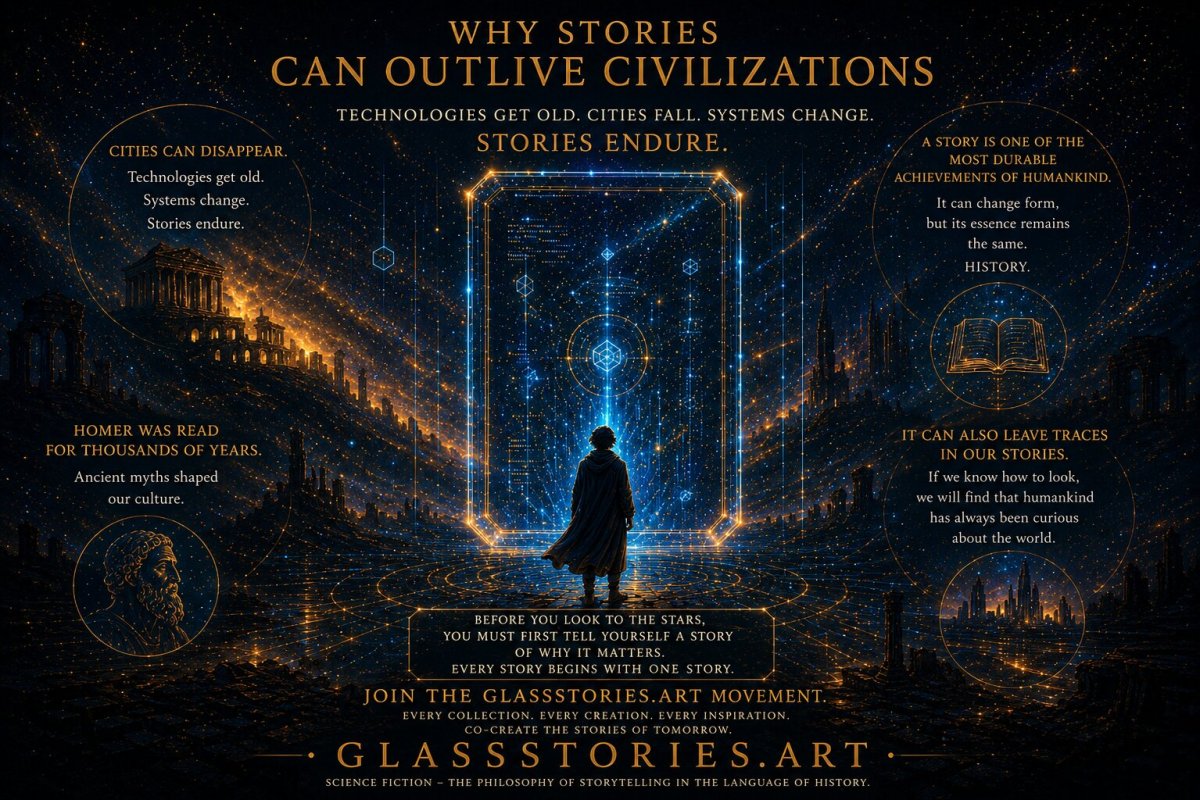
Cities may disappear. Technologies will grow obsolete. Political systems change faster than generations. Stories can endure for an extraordinarily long time.
Homer is still read after some twenty-seven centuries. The Epic of Gilgamesh is older still: its oldest poems were pressed into clay with a reed more than four thousand years ago, and we read them today in translation. Ancient myths go on shaping our culture long after the temples that housed them have fallen. Clay was the glass of that age.
A story is among the most durable inventions of our species. It changes its vessel, from the spoken word to the book, from the book to the digital file, from the file to glass, and what it carries stays the same.
I like to imagine future archaeologists brushing the dust from fragments of our time. If they find traces of our stories, I would like them to read there that this civilization was deeply curious about the world and kept pushing the boundaries of knowledge.
Tolkien had a word for the sudden turn toward joy at the end of a tale: eucatastrophe. A civilization may end badly. A story can still turn toward the light, and be told again by whoever is left.